

Posture and Pelvic Balance: Start With the Pelvis
Your pelvic posture shows you where your body is compensating.
What Is Your Posture Showing You?
The pelvis is more than the base of your spine. It is the body’s central weight-transfer system.
Forces from your upper body travel through the pelvis and sacroiliac joints before moving into your legs. The pelvis also provides attachment for many of the muscles that help you stand upright, walk, climb stairs, and maintain balance.
When that load is not shared evenly, your body may compensate above or below the pelvis.
You may notice:
-
One shoulder sitting higher
-
One hip or side of the waistband appearing higher
-
One foot turning outward more than the other
-
More pressure through one leg
-
Uneven wear on your shoes
-
Recurring tension on one side
-
A feeling that your body is twisted
-
Difficulty balancing equally on both sides
-
Lower-back, hip, neck or jaw tension that keeps returning
Pain does not always begin where the original imbalance is located. Sometimes the area that hurts is the area working hardest to keep you upright. A Posture & Structural Wellness Check offers a gentle, non-diagnostic look at how you stand, move, and distribute weight. Available by appointment in Murrieta, California.
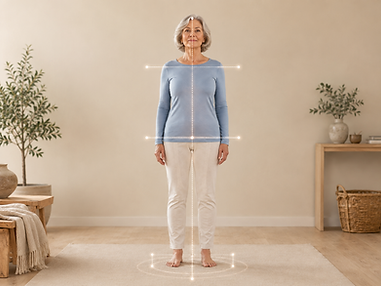
How Can I Check My Posture?
Stand naturally in front of a full-length mirror. Do not pull your shoulders back or try to correct your posture.
Let your body stand normally.
Notice the following:
1. Observe Your Head
Does your head tilt or turn slightly?
2. Compare Your Shoulders
Does one shoulder sit noticeably higher than the other?
3. Check Your Hips
Does one hip or side of your waistband appear higher?
4. Look at Your Knees
Do one or both knees turn outward more than the other? Are they bowing or bull-legged?
5. Notice Your Feet
Does one foot turn outward more than the other? Do your feet carry weight differently?
6. Recognize Your Weight Distribution
Do you naturally lean into one leg when standing?
7. Check Your Balance
While standing beside a sturdy counter or chair, notice whether balancing feels easier on one side than the other.
These observations may reveal a compensation pattern, but they cannot determine your structural category by themselves. A proper assessment considers your history, posture, movement, muscle responses, and other indicators before findings are explained.
How Can I Correct My Posture?
Your Structural Assessment
During your visit, we will look at your posture as a complete pattern rather than focusing only on the area that feels uncomfortable.
Your assessment may include:
-
Shoulder and pelvic-height comparison
-
Foot-position observation
-
Functional leg-length indicators
-
Balance and weight-distribution checks
-
Muscle-response testing
-
Pelvic and spinal movement
-
Category I, II and III indicators
-
Gentle pelvic positioning correction techniques
-
Rechecking to observe your response
Your findings will be explained in clear language so you understand what was observed and what your next step may be.
Gentle Pelvic Positioning
-
Specially shaped supports may be placed beneath the pelvis during a wellness session to create a comfortable resting position.
-
The positioning is selected according to comfort and the non-diagnostic observations made during the session.
-
You are always encouraged to communicate if a position feels uncomfortable.
-
This gentle, low-force approach may be helpful for people who prefer careful structural wellness support.
-
Spinal-breath release technique applied to support the structure of your spine
Posture & Structural Wellness Check
SESSION LENGTH:
1-hour initial visit
30-minute re-evaluation
PRICE:
$150 for 1-hour initial visit
$75 for 30-minute re-evaluation
LOCATION:
Murrieta, California
WHAT TO WEAR:
Wear comfortable clothing that allows you to stand, move, and lie comfortably.

What Is Sacro Occipital Technique?
Sacro Occipital Technique is an indicator-based system developed by Major Bertrand DeJarnette.
The name refers to the relationship between the sacrum at the base of the spine and the occiput at the base of the skull.
Rather than focusing only on the place that hurts, SOT considers how the pelvis, spine, muscles and nervous system may be working together as a larger pattern.
An SOT-informed assessment may include:
-
Postural observation
-
Pelvic and shoulder-height comparison
-
Functional leg-length indicators
-
Movement and balance checks
-
Muscle-response testing
-
Gentle positioning of the sacrum, spine, and cranium
-
Pelvic blocking when appropriate
-
Rechecking the original findings
The purpose of rechecking is to allow effective long-term results and determine whether the body responded to what was done.
Sacro Occipital Technique, commonly called SOT, organizes structural patterns into three primary categories.
The categories help a trained practitioner look beyond one painful area and consider the larger pattern affecting the pelvis, spine, muscles, and nervous system.
You may recognize yourself in one of the descriptions below. However, a category should not be determined from a photograph, mirror check, or single symptom. Your findings must be assessed by a professional and rechecked.
Your Structural Pattern Is Not a Permanent Label
-
Your posture can change as your body responds to injuries, habits, repetitive movements, stress, muscle weakness, inflammation, and changes in activity.
-
Your structural category may also change over time. This is why assessment and rechecking are more helpful than assigning yourself a permanent label.
-
The goal is not to force your body into a picture-perfect posture. The goal is to understand where your body may be compensating and help it carry weight and move more efficiently.

CATEGORY I
Category I: Fight or Flight
Category I is the broad structural pattern in SOT.
It considers the relationship between the sacrum at the base of the spine and the occiput at the base of the skull. It also looks at tension patterns that may travel through the spine and affect how the entire body organizes itself.
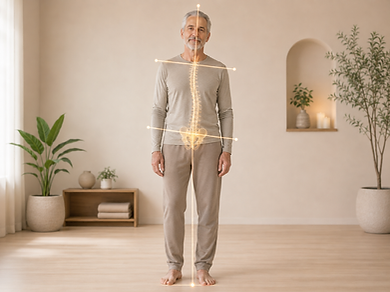
A Category I pattern may be considered when the body appears generally twisted, tense or out of balance rather than showing only one local problem.
Possible Clues
You may notice:
-
A general feeling of being twisted or uneven
-
One shoulder and the opposite hip appearing higher
-
Tension that moves from one area to another
-
Headaches
-
High blood pressure
-
Temporary relief that does not seem to hold
-
Uneven posture without one obvious painful area
-
A feeling that the entire body is compensating
A mirror check cannot confirm Category I. A structural assessment is used to determine whether this pattern is present and which areas should be addressed first.
CATEGORY II
Category II: Fatigued and Tired
Category II focuses on the weight-bearing portions of the sacroiliac joints. These are the joints where the sacrum, at the base of the spine, connects to the pelvis.
This category is especially important because the sacroiliac joints help transfer force between the upper body and the legs.
When the pelvis does not appear to be sharing weight evenly, the body may compensate through the lower back, hips, knees, feet, shoulders, or neck.
Possible Clues
You may notice:
-
One hip appearing higher
-
One leg appearing shorter
-
More weight resting on one side
-
One foot turning outward
-
One-sided lower-back or hip tension
-
Discomfort when standing for long periods
-
Uneven movement while walking
-
Difficulty feeling stable through the pelvis
-
Recurring tension that improves temporarily but returns
-
Sciatica nerve pain caused by the compression or irritation of the sciatic nerve
Category II cannot be confirmed by hip height alone. Several indicators must be considered together and then rechecked.

CATEGORY III
Category III: Disk, Lower-Back, and Nerve-Irritation
Category III is associated with a more irritated or limiting lower-back pattern. It may be considered when stress in the lower lumbar or pelvic area is accompanied by sharper discomfort, restricted movement, or symptoms extending into the buttock or leg.
Possible Clues
You may notice:
-
Strong or persistent lower-back discomfort
-
Pain or tension extending into the buttock
-
Symptoms traveling down one leg
-
Difficulty sitting, standing, or changing positions
-
Increased discomfort when bending or lifting
-
A protective or guarded posture
-
One side of the lower back feeling significantly tighter
-
Difficulty finding a comfortable sleeping position
-
A herniated disk may cause radiating numbness or tingling in the area of the body affected by the irritated nerve
Category III symptoms can have several possible causes. A careful assessment is important before deciding what kind of care is appropriate. Here we will seek prompt holistic attention for new leg weakness, loss of bladder or bowel control, numbness in the groin area, fever with severe back pain, major trauma, or rapidly worsening symptoms.

BOOK A SESSION
You Do Not Have to Keep Guessing
An uneven shoulder, higher hip, turned-out foot, or recurring one-sided tension may be your body’s way of adapting.
Instead of treating each area as a separate problem, a structural assessment can help you see the larger pattern from problems like elevated blood pressure, sciatica, and herniated disks.
Discover what your posture may be showing and receive a plan based on your individual findings.
Structural assessments are available by appointment in Murrieta, California.
FREQUENTLY ASKED QUESTIONS
Frequently Asked Questions
Can I determine my SOT category by looking in a mirror?
No. A mirror can reveal visible posture clues, but Category I, II, or III should be determined through a combination of history, structural indicators, nervous system indicators, and movement, and rechecking.
Why can a pelvic imbalance affect my shoulders or neck?
The pelvis transfers weight between the spine and legs. When weight is carried unevenly, the body may adjust above or below the pelvis to keep your eyes level and help you remain upright.
Which category is most closely connected with pelvic balance?
Category II is the SOT category most directly associated with the weight-bearing portions of the sacroiliac joints. However, uneven hips alone do not confirm Category II.
Is pelvic blocking forceful?
Pelvic blocking is generally a gentle positioning method. Specially shaped blocks are placed beneath the pelvis according to the findings from the assessment.
Do I need to be in pain for my posture to be assessed?
No. Some people notice visible imbalance, reduced balance, stiffness or uneven movement before significant discomfort develops.
Will one visit permanently correct my posture?
Every person responds differently. Long-standing compensation patterns may require more than one visit, along with movement, strengthening or habit changes. Your findings should be reassessed rather than assuming one procedure will permanently change the pattern.
What should I wear?
Wear comfortable clothing that allows you to stand, move and lie on the assessment table easily. Avoid thick belts, heavy jackets or restrictive clothing when possible.
EDUCATIONAL NOTICE
The information on this page is provided for general educational purposes. A posture self-check cannot diagnose a medical condition or confirm an SOT category. Structural care is not a replacement for emergency care, medical diagnosis, or treatment when those services are needed. Your practitioner will inform you if your assessment is out of their capabilities.